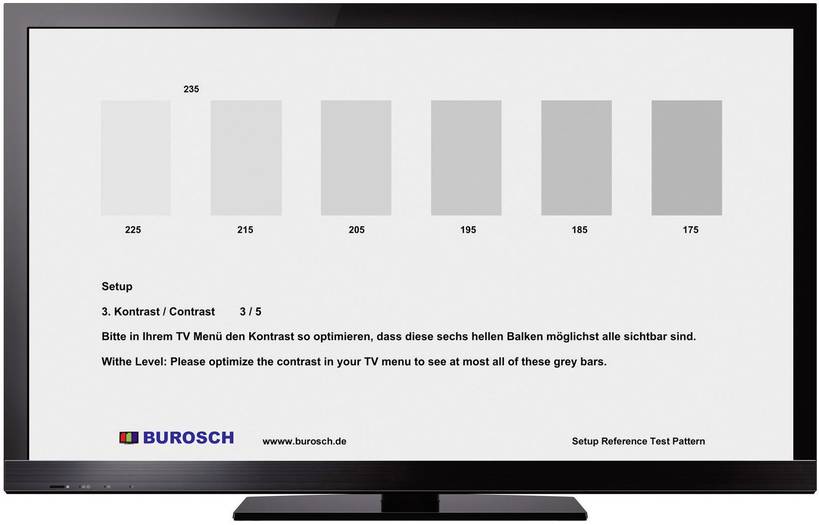
Burosch Display Expert Tuning
PCMag reviews products, but we may earn affiliate commissions from buying links on this page.Your display doesn't look quite right. Maybe the color is off. Maybe the text is too small (or too large). Maybe the resolution isn't to your liking. Well, don't despair. You can customize your display in Windows 10 to make it look just right; resize the text, change the resolution, calibrate the color, and more.The process for customizing your display varies somewhat depending on your version of Windows 10.
If you're still running a pre-Creators Update version, like the, you follow one set of steps;, which started rolling out in April, requires a different set of steps. Microsoft rarely makes anything simple. But you can still accomplish most of steps no matter which flavor of Windows 10 you're using.
How can you tell which version of Windows 10 you're running? Right-click on the Start button and look at the pop-up menu. If you see the Settings command in the menu, you have the Creators Update. If you see Control Panel in the menu, you do not have the Creators Update. Let's start with the process for those of you running Windows 10 without Creators Update.Older Versions of Windows 10First, click on the Start button Settings System Display. Unless you've already changed it, the size of your text, apps, and other items should be set to 100 percent. But maybe you find the text too small to see and work with properly.
In that case, move the slider under the option to 'Change the size of text, apps, and other items' to 125 percent.That increases the size of the text and other Windows elements. If the text is still too small, you should be able to further bump it up to 150 percent, but you might find that too large; 125 percent may be the happy medium.Next, you can change the brightness level. Move the slider under the option to 'Adjust brightness level.'
The higher the brightness level, the better you can see the screen. But this eats up the battery, assuming you're using a tablet or a laptop that's not plugged in. We'll revisit this issue a bit later; for now, bump up the brightness to the maximum level.Now click on the link for Advanced display settings. Here you can change the resolution; the smaller the resolution, the bigger the text and other elements.
However, every PC display is optimized for a certain resolution based mostly on its size. So if you'd like things to appear larger, you're typically better off increasing the size of the text as described above and keeping the resolution at its optimal and recommended level.You can also fine-tune your colors, a task that's suited for an external monitor, where you can control the color balance, contrast, and other elements.
Click on the link for Color calibration. Follow each screen in the 'Welcome to Display Color Calibration' tool. You'll be asked to adjust the gamma, the brightness, the contrast, and the color balance.When you're finished, Windows takes you to the ClearType Tuner, which can adjust your text to make it appear best for your display. Make sure ClearType is turned on, and then view the five thumbnail screens of text to decide which one looks best on each page.When you've gone through all the TrueType screens, click on the Finish button.
Your TrueType text should look at its best according to your preferences. Next, click on the link for 'Advanced sizing of text and other items.' You're taken to a Control Panel screen with several options for adjusting your display. We've already covered some of these. Two items remain.
Burosch Display Expert Tuning System
The screen displays a section to 'Change only the text size.' Click on each of the items in the first drop-down menu, such as title bars, menus, and message boxes. Then in the second drop-down menu, choose a point size for each item. This way you can increase or decrease the size of specific elements.
New evinrude etec g2 reviews ratings. Now, not so much. The warnings all relate to how the engine is wired in the public and private network so I sure hope the engine is being seen as a devise by the network. Post some pictures. Had a quick look at your video and the first thing that I noticed was the battery lead IS NOT a genuine battery lead but a home made lead so i wonder what else was hobbled together and why not post some pictures of the wiring of the dash to make sure this has been done correctly becasue I bet it has not.
Finally, click on the setting to 'Adjust brightness.' Here you can change the current brightness via the slider bar at the bottom of the screen. Then, make sure the option for Balanced (recommended) is selected. Click on the link to 'Change plan settings.'
Here you can determine if and when the brightness dims depending on whether your PC is running off battery power or is plugged in. For example, you may want to lower the brightness under battery power to make it dimmer but keep it at full brightness when plugged in. Adjust the sliders accordingly, click on Save changes, and you're done.
Windows 10 Creators UpdateOkay, now let's tackle the same goals in the Windows 10 Creators Update. In this case, however, Microsoft giveth and they taketh away.Redmond added some tricks to the Display screen under Settings, but for some inexplicable reason it removed the advanced display settings, so you can't change the size of title bars, menus, message boxes, and other elements. Sorry, Microsoft's ways don't always make sense.Click on the Start button Settings System Display. Maybe you find the text too small. Click on the drop-down menu to 'Change the size of text, apps, and other items' and select one of the other percentages, such as 125 percent, 150 percent, or 175 percent.
That increases the size of the text and other Windows elements.You can also opt for a custom size. Click on the link for 'Custom Scaling.'
At the Custom Scaling screen, type a specific number in the text field, such as 115.Sign out of Windows and sign back in for the changes to take effect. Return to the Display settings screen. You can turn off the Custom Scaling if you're not happy with it, in which case Windows returns to 100 percent scaling after you sign out and sign back in again. Again, return to the Display settings.
Next, you can change the overall resolution. Again, every PC display is optimized for a certain resolution based mostly on its size. If you still wish to tweak the resolution, click on the drop-down menu and change it to a different size. If you're happy with the new resolution, click on the button to 'Keep changes.' Otherwise, click on 'Revert' to go back to your previous resolution.You can also fine-tune your colors.
Burosch Display Expert Tuning Chart
Open Control Panel in Icon view. (You'll find Control Panel in the Start menu in the Windows System folder.) Click on the icon for Color Management.In the Color Management window, click the Advanced tab and 'Calibrate display.' When you've gone through all the TrueType screens, click on the Finish button. Your TrueType text should look at its best according to your preferences.In the Windows 10 Creators Update, you can also adjust your brightness on a laptop or tablet.
Open Control Panel in Icon view and click on the icon for Power Options. At the Power Options window, change the screen brightness by moving the slider left or right.Further, you can set the brightness for a specific power plan. Click on 'Change plan settings' for the plan you wish to tweak, such as the Balanced plan.
So I did my first calibration last night with my i1display and HD709 patterns. Attached are my before and afters. I followed the method quoted above and used the Target Y cd/m2 values provided by Chad. Here is my complete process, any tips or criticisms appreciated! (some of the steps might be out of order as I did them last night but typed this up this morning)Profile - ISF Dark RoomGoal 170 cd/m2 - used pluge pattern from HD709 (black clipping)HCFR Used the cccs profile linked in this thread for the OLED 955something or other.Settings:OLED Light 40Contrast 85Brightness 52H/V Sharp 0Color 50Tint 0Dy Contrast offS Resolution offColor Gamut NormalEdge Enhancer offGamma 2.2Noise R OffMPEG NR OffColor Temp Warm 2Once I had those settings dialed in I proceeded to set the 5% & 100% via 2 point. Took about 4 cycles.
Then I calibrated 21 point grayscale and targeted the Y cd/m2 values by adjusting luminance after adjusting the RGB values. Interestingly enough I would have to sometimes go back and fine tune the RGB after a luminance chance, especially if the luminance change was drastic. Most of my luminance was dialed negative 15-20 points.Still learning this whole process but the picture does look more natural. I just have to retrain my eyes to a warmer picture, so used to seeing blue. I am curious about a couple things though. Skin tones seem off. Not sure if its supposed to be this way or if something is not right but everyone seems to be suffering from mild heat stroke lol.
Its not terrible but it does seem everyone has more pronounced red on their skin.Curious why my gamma graph got crazy near the end as well.Again any tips, concerns or criticisms appreciated!Congrats - you're well on your way (and doing far better than I did on my first attempt ).As far as skin tones, these is a skin tones color checker you can use, either on Ted's disk or the HCFR generator (CCSG) to see how close or far off you are. Best would be to ask in the HCFR thread about that.In general 21-pt white balance calibration and color/CMS are pretty much independant, so changing 21-pt should not impact color (except near white/grey) and visa-versa.As far as gamma near 100%, it's a challange I am still learning to master. Stuff gets screwy at 100%, and that's why I get the best results using 2-pt high to balance 100% and hope it stays close to target when 21-pt nears completion. When it too far off, I will change OLED Light and then touch-up 21-pt. Raised that up to 100 a couple days ago.Did not change anything, not sure what that does?Still would start ABL @ 50% APL.Watch this video on a C6 panel and you can see the ABL just above 50% (patterns starting at 1:58).Pause and cycle between the screens at 3:15 and 3:55 (menu on & off) for another example of how these panels behave.See the picture get darker when the menu goes off.Todd255 is max - why don't you try that.And suggest you test actual content rather than menus.Another good test would be to run luminance curves with varying size Windows. Larger Windows cause ABL to kick in so you see a difference in the two curves (large windows/fields versus small windows). If the control does anything, it ought to result in the two luminance curves coming out closer to each other.
The conventional saying is - 'go with the ccss', as the ccmx is always 'colorimeter specific' - but then there is a reason why calibrators usually correct with a matrix (usually more accurate), and also - I'm 'burned' by having seen.ccss files before that werent able to correct the i1d3 accurately - so I'm willing to give both of them (ccss and ccmx) a try. (Havent decided yet which one to go with permanently.)Have you tried the ccss and your ccmx out side by side? I noticed the ccmx grayscale results are a few hundred degrees (400?) cooler than the 2015 lg oled ccss files that have been posted. I tried the ccmx on an unused port - I previously used the ccss on the cable and bluray ports. Both provide good pictures, so I'll have to see which I prefer.
I was able to quickly get down to about 1.0 average dE (skintone and gcd) with the ccmx using cms. I have a confession to make. I just assumed the '20 point' white balance controls were Percentage based for HDR modes.They're not.You absolutely NEED a proper test pattern for the HDR 20-point control points. Theres are a few too many floating variables in here again.Gamma is positively botched, because no one agrees with the next guy on where to leave the curve. Intersting how you left OLED at 100 - I had to set mine at 71 as per LGs instructions: 'With a 10-bit legal range 668 white patch on screen (563.4nits), use the TV ‘OLED Light’ adjustment to achieve a luminance of 540 nits.' Hi, from my test to a LG 65E6, the HDR instructions of LG are not providing any help at all.If you keep the Contrast/OLED @ 100, and calibrated the RGB levels for HDR, then you get an average Grayscale of about 1.6dE2000 and the errors are coming from gamma (brigher) at mid range while the RGB balance is near perfect.you get about 670nits calibrated.If you run a 5-Point Saturation with targets DCI P3 inside a REC2020 (look CalMAN HDR workflow) then you get about 2.0dE2000 average.If you keep the Contrast @ 100 and reduce OLED about 80? (I don't remember the exact value.to get 540nits) and calibrated the RGB levels for HDR, then you get an average Grayscale of about 1.0dE2000 (or lower)and the errors of gamma are reduced at mid range while the RGB balance is near perfect.you get about 540nits calibrated.If you run a 5-Point Saturation with targets DCI P3 inside a REC2020 (look CalMAN HDR workflow) then you get about 4.0dE2000 average.So using LG instructions you have more color errors and lower peak output.
Because its baked into the bt.1886 formula, and thats the new gospel (even if ever changing).sigh. But I'll try different custom gamma curves eventually so thank you for your standpoint as well.Also - I'd recommend that all of you read the following text:It goes a little into detail how different dE formulas change at different brightness level and also by how much each primary (chroma) is weight differently in the latest two dE formulas, compared to the dE formulas that were used before. Gives you a better perspective on color errors. Hi, from my test to a LG 65E6, the HDR instructions of LG are not providing any help at all.If you keep the Contrast/OLED @ 100, and calibrated the RGB levels for HDR, then you get an average Grayscale of about 1.6dE2000 and the errors are coming from gamma (brigher) at mid range while the RGB balance is near perfect.you get about 670nits calibrated.If you run a 5-Point Saturation with targets DCI P3 inside a REC2020 (look CalMAN HDR workflow) then you get about 2.0dE2000 average.If you keep the Contrast @ 100 and reduce OLED about 80? As I mentioned, my calibrator is going to return to complete the HDR calibration, but I also have some queries over the SDR calibration he already performed:With regard to ISF Dark / Light, is it advisable to set it higher to increase dynamic range? My settings are:ISF Light ISF DarkOLED Light 50 30 Contrast 80 80 Brightness 52 52Is it generally accepted now to lower gamma at IRE 5% to improve shadow detail atnear black?
My calibrator insisted it doesn't make much difference and when he tried it, that looked to ve the case on a black clipping slide.Also with HDR calibration, should Color be left at 55 or reduced to 50? That's very interesting - I'm having my calibrator return to complete redo HDR anyway as he gave up last time using the Mascilo images.So what is accepted as the correct approach? Ignore LG's guidnace where they obtained UHD Alliance certification at 540NITs and go for 670? Gamma curves are all over the place.
Everyone seems to use one he/she likes. Do what you want - you're calibrator can do what he/she wants as well.Here is the gist of it.First, gamma is greyscale on steroids. Same 'controls'. It is impossible to have a 'correct greyscale calibration' - if you havent agreed on what gamma to use. Thats why the PC standard (sRGB) has a defined gamma curve (2.2), because you've got photoshop jockeys and photographers working on print and digital publishing workflows - so thats needed.With rec 709 gamma was never defined.
I've always followed those guidelines as well but several experienced calibrators on this thread have said they on't apply to OLED. So if green is high and red and blue are balanced, I just lower green now.I basically leave 2-pt low alone since it can have such an impact on glowing blacks, and for 2-pt high, I balance 100% IRE (which required dropping red to -25, boosting green to +3, and dropping blue to -7).In an earlier calibration, I used 2-pt Low to improve balance of 2% but the result was raising black into the glowing range and the eye's ability to distinguish color at that luminance is practically non-existent, anyway.I found this out this weekend when I did a cal. Did a 2pt cal first and got High and Low to about.1 dE. Then did a 20pt cal and got the entire range to no more than.5 dE at any 5% IRE.
Popped in a Blu-ray and immediately noticed that my blacks were glowing when the BD would change from previews. Thought maybe I was imagining it so I put back in the AVS disc and put up a 0% window and my blacks were glowing. Switched to Expert Bright (I calibrated Expert Dark) and the blacks were black again.Had to reset Expert Dark. Was going to try again but it was too late and I had wasted too much time. Didn't do it Sunday because I was watching the Sunday Night game (rooting against the Cowboys lol). I'll revisit it Thursday night since I have off Friday.So you didn't do the Low pt cal at all when you did the 2pt? You just adjusted High and then moved on to the 20pt?
When you did the 20pt, did you steer clear of any of the lowere levels? Here is the continuation for HDR.With HDR gamma (now called EOTF) is now fixed for the first time. Good idea.The EOTF was created on a custom developed device at Dolby with a very high brightness level, but a worse black point, than even displays that were commercially available at the time. Also, it was made up out of thin air.But its value is, that - for the first time, its an actual standard.Well apart from the fact, that no one is reaching it. Not even post production studios.So for bright image content, we now have metadata - that should be used by the image processor in your TV to do device specific calculations, how to transfer the color values, so they looks as intended on your TV (with a different brightness output). @:With greyscale or gamma calibration, you never calibrate the 0% black level.
There are no controls for it.What seems to happen on some of the B6s at least is, that you cant just increase blue and red on low IREs, to match green - without the blackpoint all of a sudden getting brighter.In my case you have to lower green at low IREs to prevent that. (I suggest you do it already with two point.)Calibrating 'all kinds of different gamma curves' shouldnt touch the black level AT ALL. Near blacks are a different story - but 0% should never change.
This is a display specific issue - not a problem with one specific gamma curve or another.Also, this information was part of this thread already. I'm not talking about the charms menu (or whatever they call it) to the right. If you hold the menu button down for a couple seconds it takes you directly into the 'all settings' menu to the right.
This does not dim the picture but if there is a bright scene on the right half of the screen you will see it get brighter with more contrast. For what it is worth, I finally got ahold of an android device with IRDA and just got into the Service Menu.There is Menu Item '13 OLED' which contains an item 'Twin APL Threshold' which defaults to 48 but can be raised past 255 or lowered to 0. I left mine on default, but if you're brave, you can try 255 or 0 and see what it does to ABL.FYI:Also, setting OLED Light to 100 all but eliminates ABL. It's not recommended that you set OLED Light to 100 AND turn off ABSL in the Service Menu.
One or the other, depending on what bothers you more or what you feel more comfortable adjusting, but not both. I set OLED Light to 100, but I'm not going to go messing around with the Service Menu. Just my preference. @:With greyscale or gamma calibration, you never calibrate the 0% black level. There are no controls for it.What seems to happen on some of the B6s at least is, that you cant just increase blue and red on low IREs, to match green - without the blackpoint all of a sudden getting brighter.In my case you have to lower green at low IREs to prevent that.
(I suggest you do it already with two point.)Calibrating 'all kinds of different gamma curves' shouldn't touch the black level AT ALL. Near blacks are a different story - but 100% should never change.
This is a display specific issue - not a problem with one specific gamma curve or another.Also, this information was part of this thread already.I know you can't adjust 0% directly.I calibrated my 65' E6. I did a standard 2pt cal first adjusting 80% using High controls and 20% using Low controls.
I didn't touch Green, following the general rule. I raised Red and Blue. I then did a 20pt cal. Again, never touching Green and just raising or lowering Red and Blue as necessary.
Seemed in the upper register Red and Blue always needed lowering and in the lower registered they needed raising.After touching all of the 5% points (excluding 0% obviously) My dE was lower than.5 across the board. Tested on Casino Royale BD and saw that my blacks were glowing.
To be sure it wasn't my imagination I put back in the AVS test disc and confirmed that at 0% my blacks were elevated (my Brightness was set to 50). Switched from Expert Dark (calibrated) to Expert Bright (not calibrated) and the blacks were normal on Expert Bright but glowing on Expert Dark.I figured that it was because I raised Red and Blue in the lower register instead of lowering Green. Was going to try another cal doing just that, but it was so late after wasting so much time getting it to what I thought were perfect levels.Seems like you are confirming that Green should not be left alone as the general rule doesn't apply to these OLEDs so I'm going to do that when I make another attempt on Thursday. FYI:Also, setting OLED Light to 100 all but eliminates ABL.
It's not recommended that you set OLED Light to 100 AND turn off ABSL in the Service Menu. One or the other, depending on what bothers you more or what you feel more comfortable adjusting, but not both. I set OLED Light to 100, but I'm not going to go messing around with the Service Menu. I have a i1 display pro on the way but I wanted to at least start working on the luminance curve for my 55B6P.I used my old X-rite DTP-94 and HCFR in both LCD mode and CRT (measured 10% window patterns in 5% steps).Both gave different results but I know the LCD mode works as I tested on my bedroom LCD first and got similar results to what I measured over 2 years ago. The gamma curve was way off and definitely not what I'm seeing with my eyes (TV menu gamma@& no other 20 pt. It showed a low gamma (2.0) at the low end 5-30% and high gamma 2.4 from 60-95%.
Same gamma curve but different light levels with the meter in CRT mode.I guess that meter just does not work correctly with the OLED light etc.For those that are also using the i1 display pro, what panel type settings are you using and are you using any profile matrix?ThanksTodd. In that post you linked it says you tested OLED Light at 20 to 65. I didn't see anywhere where you said you tested it at 100.Keep in mind, OLED Light at 100 doesn't eliminate ABL completely, but it lessons it a good deal.It' would be so bright at 100 it's probably hard to tell.I would never have OLED light over 50 for SD content so no matter.OLED at 37 & Contrast at 80 makes it more tolerable.The ABL design should have been the overall panel brightness and not the average picture level going into the panel (after processing etc.).
I found this out this weekend when I did a cal. Did a 2pt cal first and got High and Low to about.1 dE. Then did a 20pt cal and got the entire range to no more than.5 dE at any 5% IRE.
Popped in a Blu-ray and immediately noticed that my blacks were glowing when the BD would change from previews. Thought maybe I was imagining it so I put back in the AVS disc and put up a 0% window and my blacks were glowing. Switched to Expert Bright (I calibrated Expert Dark) and the blacks were black again.Had to reset Expert Dark.
Was going to try again but it was too late and I had wasted too much time. Didn't do it Sunday because I was watching the Sunday Night game (rooting against the Cowboys lol). I'll revisit it Thursday night since I have off Friday.So you didn't do the Low pt cal at all when you did the 2pt? You just adjusted High and then moved on to the 20pt? When you did the 20pt, did you steer clear of any of the lowere levels?I did just like you, completed a 'classic' calibration, discovered glowing blacks, started over focusing on near black first and found something that worked better.My first 'new' attempt used 2-pt low to balance 3% and 2-pt high to balance 100% (using a few cycles ). It gave me a nice balanced near-black, but involved large changes to 2-pt low that caused a more imbalanced 5-95% and didn't improve near-black luminance levels at all.
And I realized that unless it is way, way, off, the white balance at 2% and 1% is pretty much invisible/immaterial.So my last attempt I left 2-pt low alone, used 2-pt high to balance 100%, raised 5% to target (0.26 cd/m2 for 170 cd/m2 peak), and then completed 5-95% using the computed targets I posted earlier.I'm not sure what you mean by 'steering clear of the lower levels'? 5% was adjusted early on and rarely had to be changed much in 21-pt sweeps.
But as the full 21-pt adjustments settle in and overall xy and dE errors get lower and lower, 5% sometimes adjusts by a click or two.One other thing I do differently with these OLEDs than I did with other TVs is focus first on xy and then luminance. I get white balanced across the entire 21-pt range first, ignoring luminance except to know whether I'd prefer it to increase or decrease. Using xy errors, I can get white very balanced in a first phase. And then using primarily Adjusting Luminance controls, I can shape my desired gamma curve by hitting luminance targets in a second phase. There's usually a bit of touch-up at the end, but I find that these new Adjusting Luminance controls greatly speed-up 21-point white balance.
I did just like you, completed a 'classic' calibration, discovered glowing blacks, started over focusing on near black first and found something that worked better.My first 'new' attempt used 2-pt low to balance 3% and 2-pt high to balance 100% (using a few cycles ). It gave me a nice balanced near-black, but involved large changes to 2-pt low that caused a more imbalanced 5-95% and didn't improve near-black luminance levels at all.
And I realized that unless it is way, way, off, the white balance at 2% and 1% is pretty much invisible/immaterial.So my last attempt I left 2-pt low alone, used 2-pt high to balance 100%, raised 5% to target (0.26 cd/m2 for 170 cd/m2 peak), and then completed 5-95% using the computed targets I posted earlier.I'm not sure what you mean by 'steering clear of the lower levels'? 5% was adjusted early on and rarely had to be changed much in 21-pt sweeps.
But as the full 21-pt adjustments settle in and overall xy and dE errors get lower and lower, 5% sometimes adjusts by a click or two.One other thing I do differently with these OLEDs than I did with other TVs is focus first on xy and then luminance. I get white balanced across the entire 21-pt range first, ignoring luminance except to know whether I'd prefer it to increase or decrease.
Using xy errors, I can get white very balanced in a first phase. And then using primarily Adjusting Luminance controls, I can shape my desired gamma curve by hitting luminance targets in a second phase.
There's usually a bit of touch-up at the end, but I find that these new Adjusting Luminance controls greatly speed-up 21-point white balance.When I said steer clear of any lower levels, I meant when doing the 20pt cal, did you adjust the lower levels to balance them, like 5% and 10%, or did you leave them be, because they are so dark that any errors in grayscale wouldn't really be visible, so why take the chance of getting glowing blacks? Just trying to figure out if the glowing blacks I got were a result of doing the 2pt Low adjustments on 20% (raising Red/Blue to match Green instead of lowering Green) or were they a result of adjusting 5% during the 20pt cal, and raising Red/Blue to match Green instead of lowering Green.Did you raise Red/Blue in the lower register to match Green, or lower Green, or did you raise Red/Blue to match Green and then adjusted Luminance down afterwards (which would still be lowering Green since it lowers all 3 by the same amount, correct?)?
It' would be so bright at 100 it's probably hard to tell.I would never have OLED light over 50 for SD content so no matter.OLED at 37 & Contrast at 80 makes it more tolerable.The ABL design should have been the overall panel brightness and not the average picture level going into the panel (after processing etc.).I hear you. I personally don't mind the bright super contrasty image. I watch movies with the lights off and shades drawn, as well as gaming in that same fashion, and I haven't found it to be too bright.
I've also never seen any evidence of ABL, so it's pick your poison I guess.